
Bonds & Yield are being developed as a separate productive-capital layer within the Otter Oasis ecosystem. The aim is simple: build additional sources of ecosystem support over time instead of relying only on new Eco Ranger mints, Digital Participation Share purchases or Membership payments.
This part of Otter Oasis is project-controlled infrastructure. It is not a bond product being sold to participants, and holding Eco Rangers, Shares or Membership does not give anyone ownership of the Bonds & Yield wallet or the assets it may hold.
The strategy is intended to grow gradually, with capital deployed only where suitable opportunities and acceptable risk conditions exist. Returns are not guaranteed, quoted yields can change, and capital can be lost.
Bonds & Yield: What Is the Purpose?
The purpose of Bonds & Yield is to create productive ecosystem capital. Instead of every pound or dollar entering Otter Oasis being immediately spent or distributed, defined allocations can help build a pool of capital that may be used in approved bond-like, DeFi or other yield-producing strategies.
If those strategies generate realised profit, that profit can provide another source of support for the wider ecosystem. This helps diversify the funding model and supports the long-term objective of reducing reliance on new participant inflows as the only source of funding.
How Bonds & Yield Are Funded
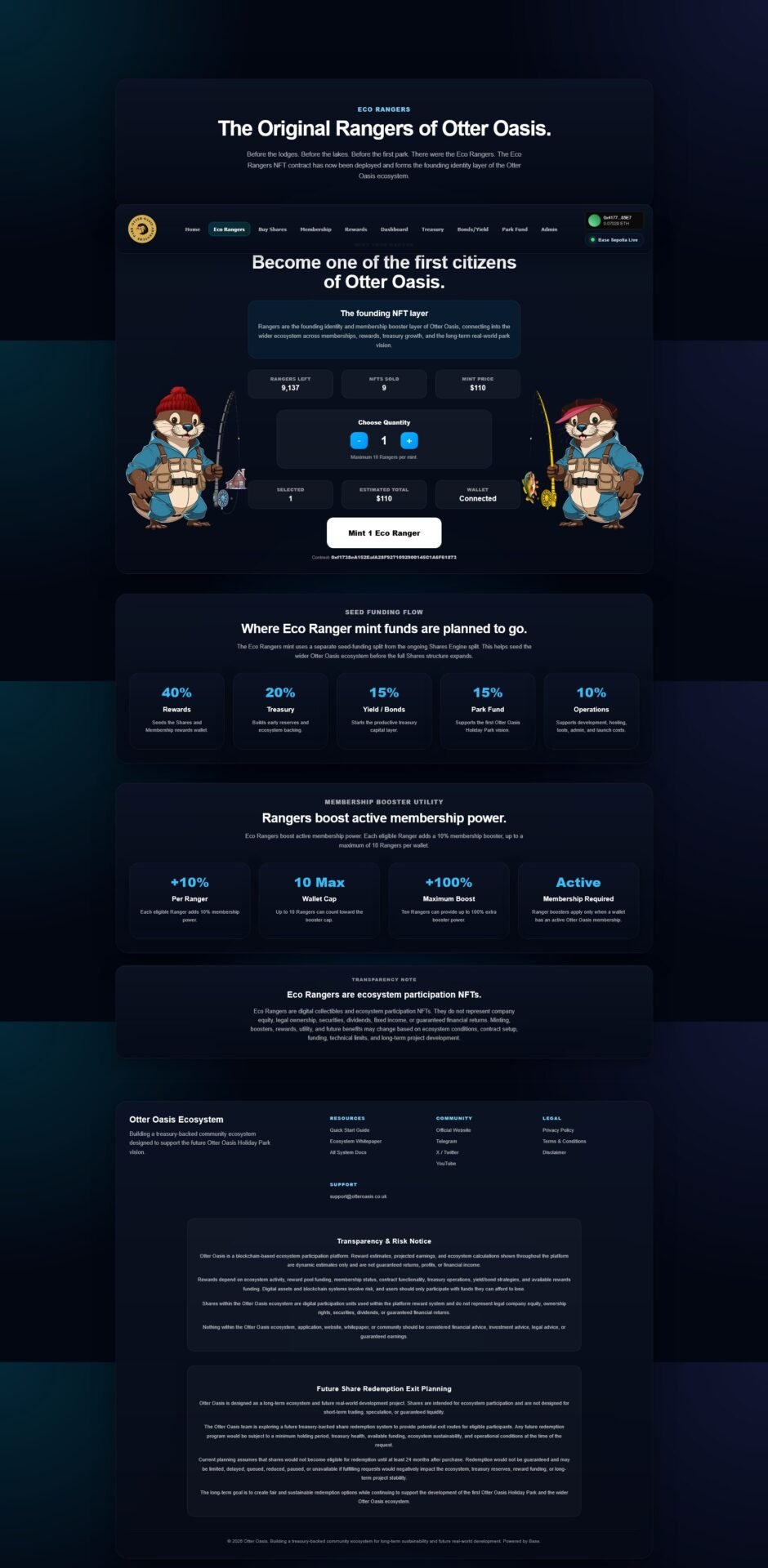
The Bonds & Yield layer has its own dedicated allocation within the wider Otter Oasis funding structure. Under the current model, 10% of primary Digital Participation Share and Membership revenue is directed to Bonds & Yield.
Eco Rangers use a separate founding allocation model, with 15% of primary Eco Ranger revenue directed to Bonds & Yield. These allocations are designed to build the productive-capital layer over time rather than depend on a single large transfer.
The project also maintains a dedicated Bonds & Yield wallet so this capital can remain separate from the Rewards Pool, Treasury, Park Fund and Operations funds. That separation makes the purpose of each funding area easier to understand and inspect.
Bonds & Yield: A Gradual Deployment Strategy
Otter Oasis is not designed around putting every available dollar into an external protocol at once. The current planning approach is gradual deployment, allowing the project to consider market conditions, available funds, risk and the suitability of individual opportunities before capital is committed.
The current planning reference is an initial deployment of $50,000, followed by approximately $5,000 per month over a longer period. These are planning references rather than promises. They can be reduced, delayed, paused or changed if available funding, market conditions or risk assessments make deployment inappropriate.
This matters because productive capital only helps the ecosystem if the risks are understood. Chasing the highest advertised yield is not the objective. The aim is to develop an additional funding engine responsibly and over time.
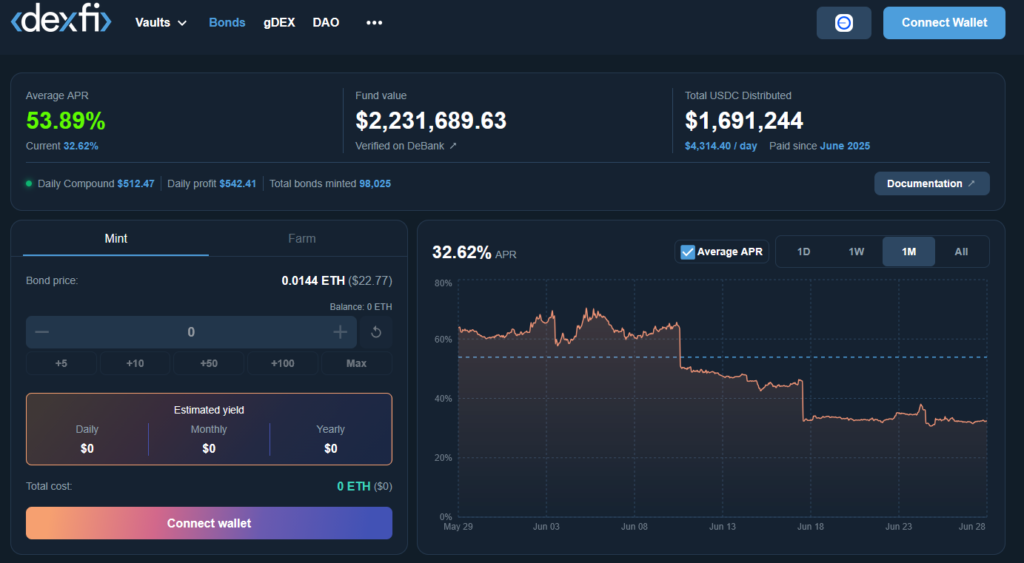
One of the bond-based opportunities we have been exploring is DexFi Bonds. If you want to understand the type of protocol being considered, you can visit DexFi and research how its bond system works for yourself.
Disclosure: This is an affiliate link. Otter Oasis may receive a referral benefit if you use it, at no additional cost to you. Any referral benefit received also helps support the continued development of the Otter Oasis ecosystem.
What Happens to Realised Yield?
When the project actually realises profit from the Bonds & Yield strategy, the current intended allocation is:
- 25% Compounding / Bonds Capital to help keep part of the realised profit productive.
- 20% Rewards to provide additional support for the ecosystem Rewards Pool.
- 40% Park Fund to support the long-term real-world Otter Oasis vision.
- 10% Treasury to strengthen long-term ecosystem reserves.
- 5% Operations to support legitimate development and operating requirements.
This allocation applies to realised Bonds & Yield profit. It is different from the allocation applied when someone purchases Digital Participation Shares, pays for Membership or mints an Eco Ranger.
Keeping 25% for compounding is intended to allow part of successful realised profit to remain productive, while the other allocations can strengthen different parts of Otter Oasis.
Why Productive Capital Matters to Otter Oasis
A long-term ecosystem is stronger when it is not dependent on one source of funding. Eco Rangers can support the founding stage, Shares and Membership can support participation, Treasury reserves can strengthen the financial foundations, and the Park Fund can remain focused on the real-world vision.
Bonds & Yield add another potential source. If productive-capital strategies are successful, realised profit may help support Rewards, Treasury, Operations and the Park Fund while also allowing part of the capital base to continue growing.
That is the bigger objective: diversify the ecosystem's support mechanisms rather than assume that new purchases will continue forever.
Bonds & Yield Risks
Bonds & Yield should never be described as guaranteed income. External strategies can fail, and different opportunities carry different risks.
Depending on the strategy used, risks can include smart-contract vulnerabilities, protocol failure, liquidity problems, counterparty risk, market losses, de-pegging, regulatory changes and changing yield rates. Historical or current APR figures do not guarantee future performance.
Capital deployed into an external strategy can lose value or become unavailable. For that reason, the project can decide not to deploy capital, pause further deployment or change strategy when conditions make that appropriate.
You can read the wider project disclosures on our Risk Disclosure page and review the current ecosystem structure in the Otter Oasis documentation.
Bonds & Yield and the Park Vision
The long-term Otter Oasis vision goes beyond the digital ecosystem. The aim is to work toward a real-world destination built around fishing, nature, wildlife, accommodation and family experiences.
Under the current realised-yield model, the Park Fund receives the largest individual allocation from realised Bonds & Yield profit at 40%. That does not guarantee land acquisition, planning permission, construction or a park opening. It creates another potential route through which successful ecosystem activity can support the long-term Otter Oasis Park Vision.
Bonds & Yield: The Bigger Picture
Bonds & Yield are not intended to replace Eco Rangers, Digital Participation Shares, Membership, Treasury or future real-world revenue. They are one part of a wider system in which different funding layers have different jobs.
The strategy is still subject to available capital, market conditions, risk assessment, legal and regulatory considerations and project decisions. What matters is that productive capital is developed carefully, transparently and with the long-term health of Otter Oasis in mind.
If it works as intended, Bonds & Yield can become another source of support for the ecosystem. If conditions change, the strategy can change with them.
Explore Otter Oasis
To see how this layer fits into the wider project, explore the Otter Oasis home page, read about the Park Vision, or visit the Otter Oasis Community as we continue building the ecosystem step by step.


Pingback: How Reward Power Works - Otter Oasis Adventure Park
Pingback: Otter Oasis Funding Layers: How the Ecosystem Works
Pingback: Otter Oasis Treasury, Why Every Sustainable Ecosystem Should
Pingback: Otter Oasis App Build: Inside the Current Platform
Pingback: NFT Staking Rewards: The Problem We Found - Otter Oasis Adventure Park
Pingback: Otter Oasis Ecosystem Guide: Everything You Need to Know - Otter Oasis Adventure Park
Pingback: Treasury-Backed Ecosystem, Why We're Building It - Otter Oasis Adventure Park
Pingback: Where Every Dollar Goes In Otter Oasis - Otter Oasis Adventure Park
Pingback: Crypto Protocols Fail Over Time: Why So Many Do - Otter Oasis Adventure Park
Pingback: Real-World Crypto Project: Connecting Digital And Physical - Otter Oasis Adventure Park
Pingback: Sustainable DeFi Projects: What Makes A Model Last?