
Sustainable adventure tourism is about enjoying the outdoors without forgetting what makes those experiences possible in the first place: healthy landscapes, wildlife, local communities and places worth visiting.
That idea fits naturally with the long-term Otter Oasis vision. Fishing lakes, nature trails, wildlife experiences, family activities and accommodation could all form part of the future Holiday Park, but simply putting them together would not automatically make the project sustainable.
If Otter Oasis reaches the physical development stage, sustainability will have to be demonstrated through the choices we make about the land, water, wildlife, buildings, resources and the wider community.
What Is Sustainable Adventure Tourism?
Sustainable tourism looks beyond whether visitors enjoy themselves. It also considers the effect tourism has on the environment, the local community and the long-term viability of the destination.
UN Tourism describes sustainable tourism as tourism that takes account of its current and future economic, social and environmental impacts while considering visitors, the industry, the environment and host communities.
For an outdoor destination, that principle can include responsible use of natural resources, protecting biodiversity, managing waste, respecting local communities and creating a business that can operate responsibly over the long term.
VisitEngland is now encouraging tourism businesses to go even further through its Regenerative Tourism Guide. The idea is that tourism should aim to have a positive impact and leave a place better than it was before.
That is a useful standard for Otter Oasis to work towards.
What Sustainable Adventure Tourism Means for Otter Oasis
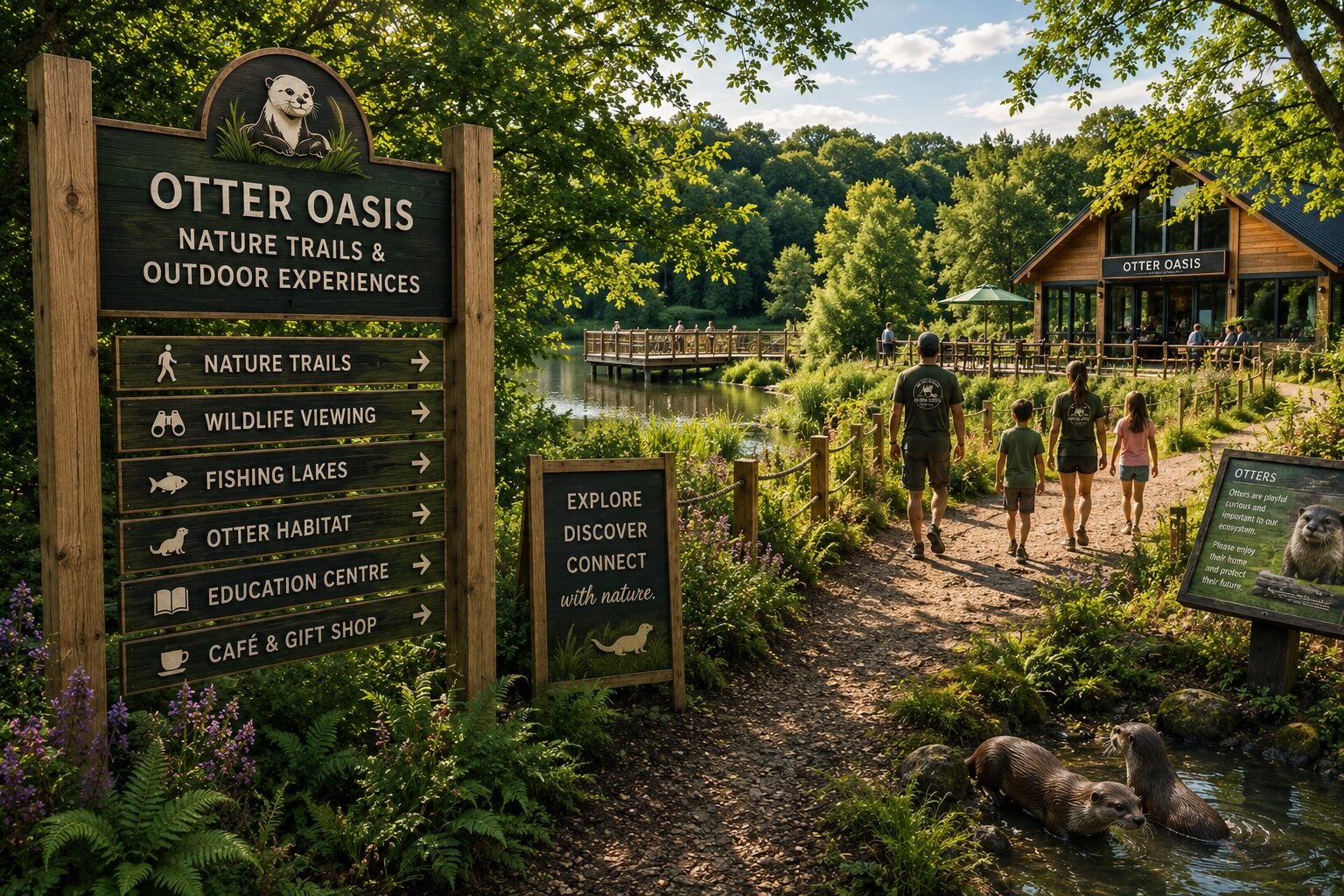
Otter Oasis is not intended to become a huge attraction packed with rides, concrete and artificial entertainment. The character of the project comes from the outdoors.
The current Park Vision brings together several nature-focused ideas:
- Fishing lakes and angling experiences
- Nature trails and outdoor spaces
- Nature-focused accommodation
- The future Otter Habitat
- Wildlife and educational experiences
- Family activities connected to the outdoors
- Places to relax away from busy everyday life
The attraction should be the environment itself. That means the natural character of a future site would be something to work with rather than something to clear away and replace.
Fishing Can Be Part of the Nature Experience
Fishing is one of the original foundations behind Otter Oasis and would remain an important part of the future park.
But a fishing lake is also a living environment. Water quality, bankside vegetation, fish welfare, litter, wildlife and the way anglers use the lake all matter.
For Otter Oasis, responsible fishing should therefore sit alongside habitat management rather than being treated as a completely separate activity.
There is also a family side to it. Fishing can bring generations together and introduce children to patience, wildlife and the outdoors in a way that is very different from another day spent looking at a screen.

Building With Nature Instead of Over It
A future site would need proper surveys and professional advice before development plans were finalised. Existing habitats, waterways, trees, wildlife corridors and ecological features could all affect what should be built and where.
That may mean some areas are best left quiet. Other areas could potentially be improved through planting, wetland creation or better habitat connections.
Paths, accommodation, visitor facilities and activity areas would then need to fit around those decisions.
This is where the phrase sustainable development has to become more than marketing. If protecting an important habitat means changing a layout or building less in one part of the site, that may be the responsible decision.
The Otter Habitat Has a Wider Purpose
The proposed Otter Habitat is one of the clearest examples of how wildlife could become part of the visitor experience without losing sight of education and welfare.
As explained in our rebuilt Otter Habitat article, the final form of any habitat would need to be shaped by the site, regulations, expert advice and animal welfare.
The wider opportunity is to help visitors understand wetlands, waterways and the other species that depend on them. A wildlife experience can be enjoyable while also giving people a better understanding of why habitats need protecting.
Accommodation Should Fit the Landscape
Accommodation is another important part of the long-term Holiday Park vision. The aim is to give people somewhere comfortable to stay while keeping the outdoor environment central to the experience.
When the project reaches the design stage, sustainability questions should include how much land is used, where accommodation is positioned, how energy and water are managed, what materials are chosen and how waste is reduced.
Good design should also consider light, noise and the effect visitors can have on wildlife and neighbouring areas.
We are not claiming those solutions are already designed. They are the kind of decisions that would need to be made properly if the physical park moves forward.
Sustainable Adventure Tourism Is About Supporting the Local Area Too
Sustainable adventure tourism is not only about wildlife and energy use. Tourism also affects the people and businesses around a destination.
UN Tourism's sustainability principles include respecting host communities and maintaining viable long-term economic activity. VisitEngland similarly places communities, visitors, nature, partnerships and sustainable growth within its current approach to regenerative tourism.
For a future Otter Oasis site, that could eventually mean opportunities to use local suppliers, create jobs, work with nearby businesses and encourage visitors to spend money in the surrounding area.
The exact opportunities would depend on where the park is ultimately developed and how large it becomes. But the principle is important: a successful destination should aim to contribute to the area around it rather than exist in isolation.

Managing Visitors Responsibly
More visitors are not automatically better if a site cannot handle them responsibly.
Car parking, traffic, footpaths, waste, noise and pressure on sensitive areas can all increase as visitor numbers grow. A nature-focused park therefore needs to consider capacity as well as attractions.
Some areas may need clear paths to keep people away from sensitive habitats. Wildlife areas may need quieter periods or controlled access. Good signs, bins and visitor information can also help people enjoy the site responsibly.
The aim should be to create memorable experiences without damaging the very environment people came to enjoy.
Sustainability Has to Be Measurable
It is easy for a tourism project to describe itself as green, eco-friendly or sustainable. Those words mean very little unless they are backed by action.
If Otter Oasis becomes a physical destination, we should be able to look at real things: habitat protected or improved, energy and water use, waste reduction, responsible sourcing, visitor management and how the project interacts with the local community.
VisitEngland's current regenerative tourism resources include self-audit and action-planning tools for tourism businesses. That practical approach is much closer to how we believe sustainability should be treated.
We would rather work towards measurable improvements than make environmental claims before there is evidence to support them.
Adventure Does Not Have to Mean Extreme
The word adventure can make people think of extreme sports. That is not what it has to mean at Otter Oasis.
For one visitor, adventure might be landing their first carp. For a child, it could be following a nature trail and spotting wildlife. Someone else may simply enjoy waking up beside a lake, walking through the site and spending a weekend outdoors with their family.
Those experiences are simple, but they are real. They also fit the kind of park we want to create far better than filling the site with artificial attractions.
Sustainable Adventure Tourism and the Otter Oasis Vision
Sustainable adventure tourism gives Otter Oasis a useful direction, but it is not a badge we can simply give ourselves.
The physical park remains a long-term vision. Land still has to be secured, planning and professional assessments would be required, funding has to develop and the final site would influence what can realistically be built.
If we reach that stage, the goal is to make nature part of the foundation rather than an afterthought. Fishing, wildlife, accommodation and family experiences should work together while respecting the environment that makes the destination possible.
That is the kind of Holiday Park we want Otter Oasis to become: somewhere people can stay, explore, fish, learn, relax and reconnect with the outdoors while the project continues working to protect what makes the place special.
You can explore the wider concept on our Park Vision page and follow the stages towards the physical project on the Otter Oasis Roadmap.


Pingback: Wildlife Conservation at Otter Oasis